
The Orchard We Almost Missed
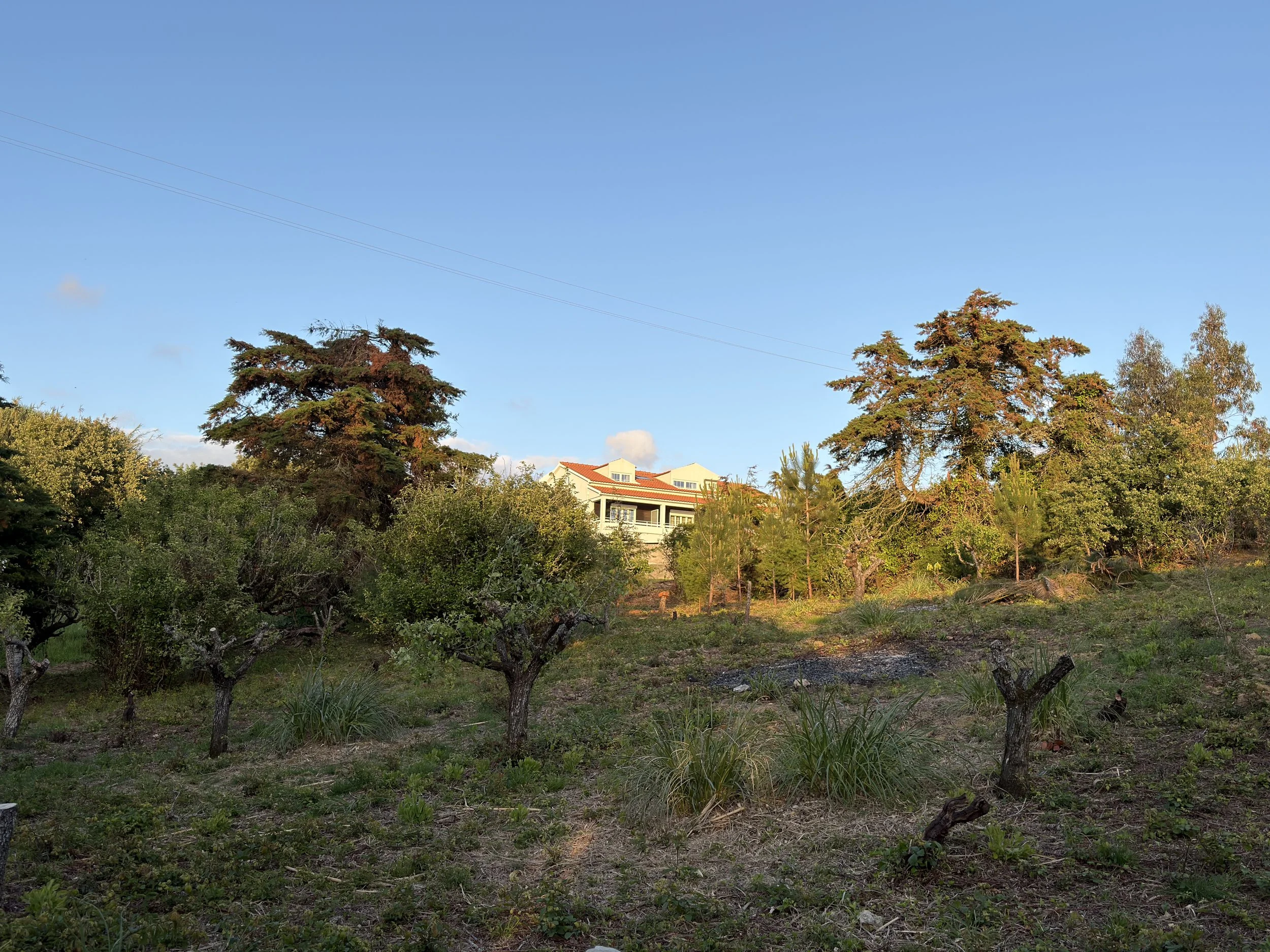
When we first came to look at the small hotel for sale in the seaside town of Ericeira over three years ago, we immediately noticed the large green, wild space in front of the house.
Beyond the parking lot wall was a field of tall grass. Next to it was a dense, almost impenetrable thicket of dead-looking trees, twisted English ivy, fifteen-foot blackberry canes, thorns, and tangled shrubbery. It looked abandoned, unloved, and without much purpose. “It’s perfect,” we thought.
Lisa and I asked who owned the land and what it was being used for. The hotel owner, Lurdes, told us that the field immediately in front of the house was not officially for sale, but that the family who owned it had once been willing to sell. She knew less about the overgrown orchard beside it, which had likely been abandoned for more than fifty years.
That first encounter set off a long chain of events.
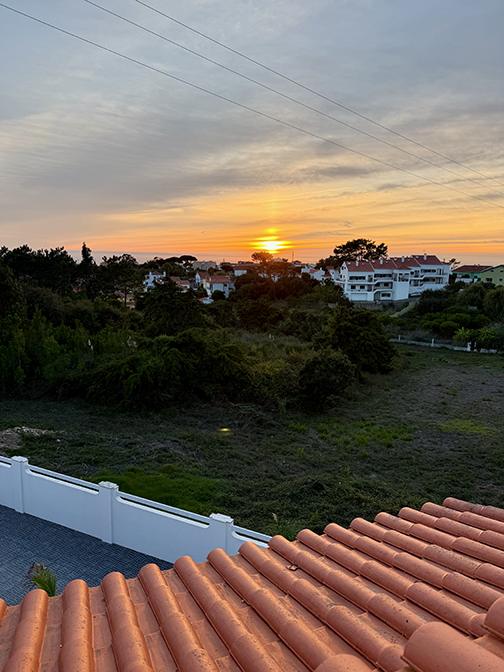
It took us from contemplating a hotel 5,200 miles from where we lived, to buying what is now O House in Ericeira, Portugal. It took us to a conference room in Lisbon, where thirteen people representing three generations of the family that owned the field gathered to sign the deed. Later, it led us to buy the larger plot with the dead-looking orchard from another Ericeira family.
And now, somehow, it has led me to become an official resident of Portugal and to live on what we have started calling O Campus.
Last year, when we needed to clear the field for annual fire prevention, I spoke with a contractor about bringing in heavy equipment to bulldoze the middle section of dead trees and overgrown brush. At the time, it felt practical. The land was inaccessible, and the growth was wild. The trees looked gone, and I was anxious to see what we could create out of the space.
As it turned out, misfortune was luck.
The contractor was slow to respond. When the quote finally came, it was expensive. I was almost about to say yes, but then he stopped responding altogether. One of those frustrating moments that happens occasionally when you are trying to get things done in Portugal, especially with the language barrier. Only this time, the delay was a blessing.
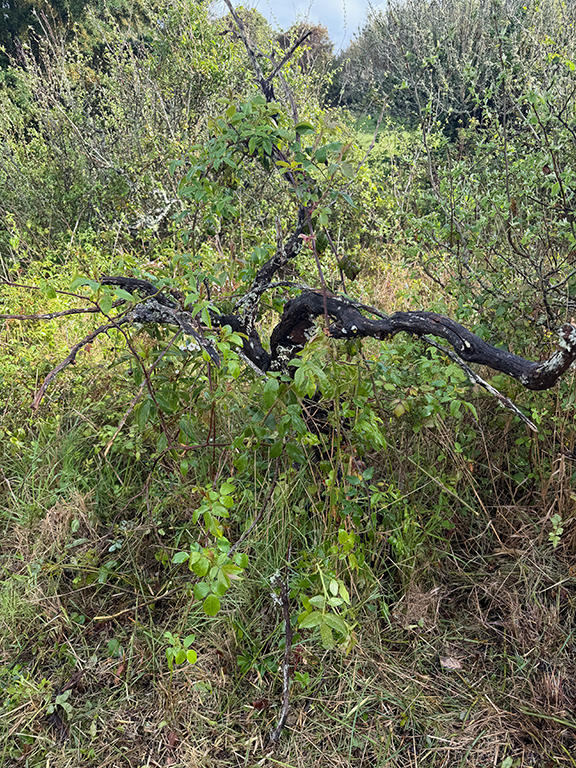
The land covered in over 50 years of thickets
This spring, I hired a new gardener, Mikhael, to help tend our growing collection of plants in our courtyard. I asked him what it would take to clear the land where the old orchard had been. He disappeared into the thicket for a while. When he came back, he told me two things:
First, it would take him and his partner a couple of days to clear enough of the land to see what was really there.
Second, the orchard was likely not dead.
He thought much of it was dormant, neglected, buried, and badly overgrown. But not dead.
“Oh wow,” I exclaimed. “Let’s open it up!”
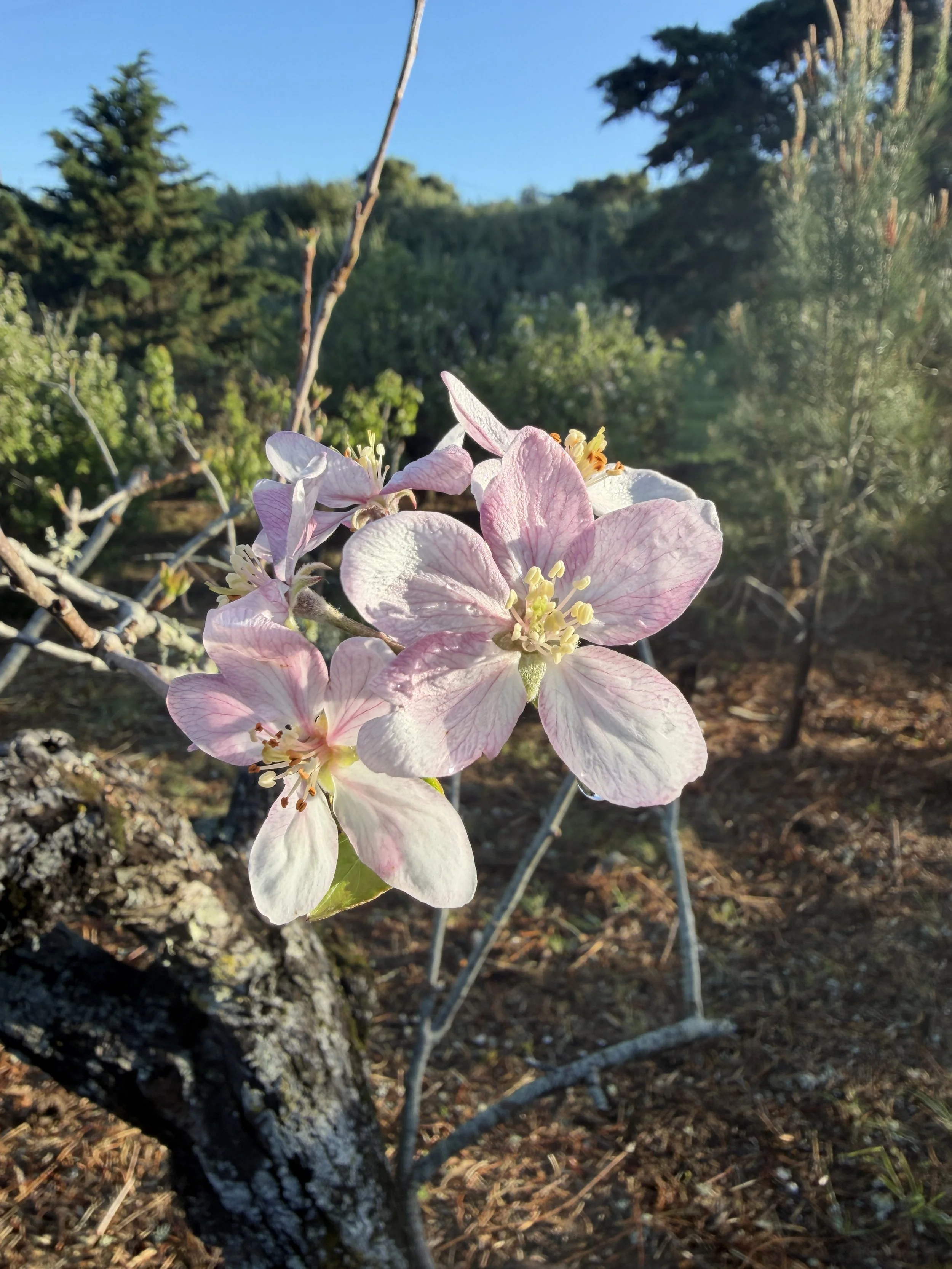
A couple of days later, we could finally walk through the land. Under all those decades of brush and brambles, Mikheal found more than thirty fruit trees that might be saved. Most are pear trees, some are quince trees, and one is an apple tree. And once the ground opened up, we could see something else: it had also been a small vineyard.
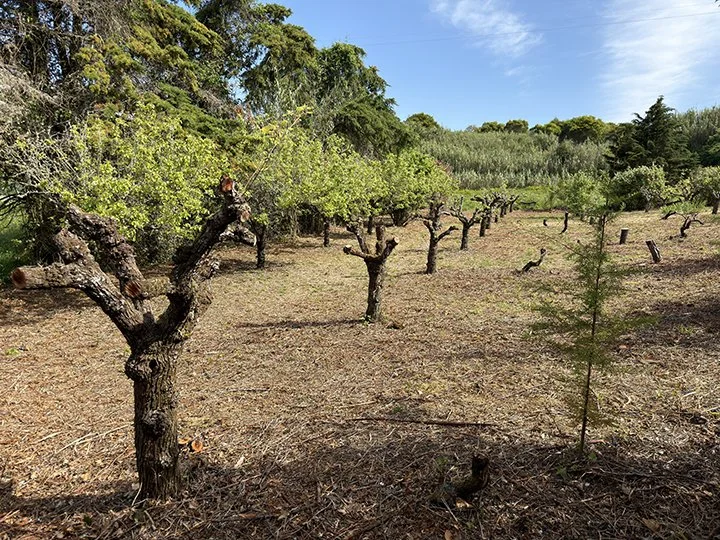
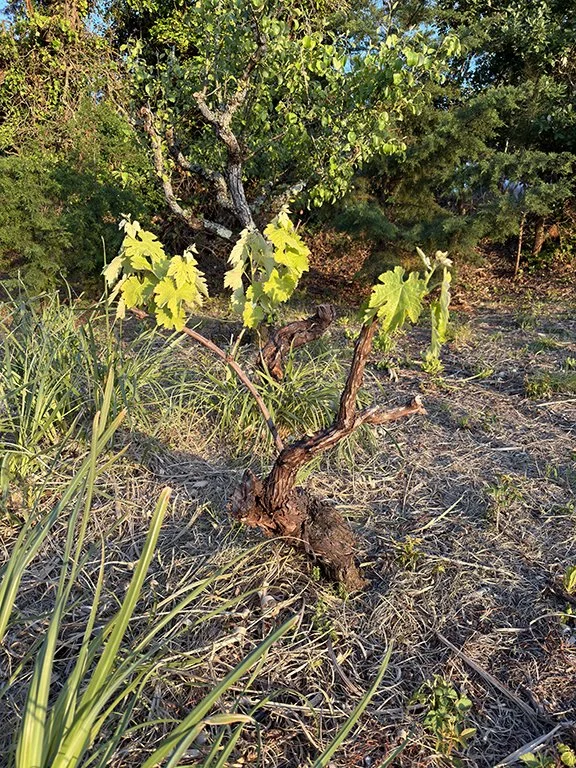
Between the rows of pear trees were old grapevine rootstocks sticking out of the ground. Some still had remnants of wire wrapped around their bases. They looked ancient and mostly lifeless. But like the orchard, some of them were unfinished as well.
Lisa and I love to dream and design beautiful, nurturing, welcoming garden spaces. O Campus is the largest piece of land we have ever owned, and over the next decade or so, we hope to create an intentional community and botanical garden with different spaces and rooms for people to connect to nature, art, each other, and with the land itself. And now we can add the intention of connecting with Portugal's agricultural roots.
It was incredible to discover this hidden treasure that we did not need to invent. We simply needed to uncover it. And to think, we almost missed it.
Waking up each day with a grateful heart.
